How to winterize your house, by climate
Winterize your house once a year, in early fall, before the first hard freeze. Most of the work is a weekend of small jobs: protecting water lines, sealing drafts and getting the heating system checked.
The colder your climate, the earlier you start. In the far north, prep begins in late summer or early fall. In warm southern zones, freezes are rare, but outdoor pipes can still burst in a cold snap. The table below shows when each task falls in your zone, and the home maintenance calendar builds a full schedule.
When to do it in your climate zone
| Climate zone | Like | Disconnect hoses and protect outdoor faucets | Check pipe insulation in unheated areas | Check caulking and weatherstripping | Schedule a heating tune-up | Winterize the sprinkler system |
|---|---|---|---|---|---|---|
| Zone 1 (very hot) | Miami, Honolulu, Key West | Not usually needed | Not usually needed | October | Not usually needed | Not usually needed |
| Zone 2 (hot) | Houston, Phoenix, Orlando, Dallas | November | Not usually needed | October | November | Not usually needed |
| Zone 3 (warm) | Atlanta, Nashville, Las Vegas, Los Angeles | October | October | September | October | October |
| Zone 4 (mixed) | Washington DC, New York City, St. Louis, Seattle | October | October | September | October | October |
| Zone 5 (cool) | Chicago, Denver, Boston, Salt Lake City | October | October | September | September | October |
| Zone 6 (cold) | Minneapolis, Fargo, Burlington (Vermont), Helena | September | September | August | September | September |
| Zone 7 (very cold) | Duluth, Caribou (Maine), Anchorage | September | September | August | August | September |
| Zone 8 (subarctic) | Fairbanks and interior Alaska | August | August | July | August | August |
Months are typical for each zone and match the free HouseByMonth calendar. Not sure of your zone? Find your climate zone. Weather varies year to year, so move a task earlier if a cold snap or heat wave arrives early.
Why winterizing matters
Water expands as it freezes. The American Red Cross notes that this puts tremendous pressure on metal and plastic pipes, which is how a single cold night can split a pipe.
Drafts and an unchecked heating system cost you in other ways. ENERGY STAR points out that faulty gas or oil connections are a fire hazard and can contribute to health problems.
Reasons to start early
- An early cold snap is in the forecast.
- You feel drafts around doors and windows, or see cracked or peeling caulk.
- The heating system made odd noises or cycled poorly last winter.
- You'll be away from the house for part of the winter.
Your winterizing checklist
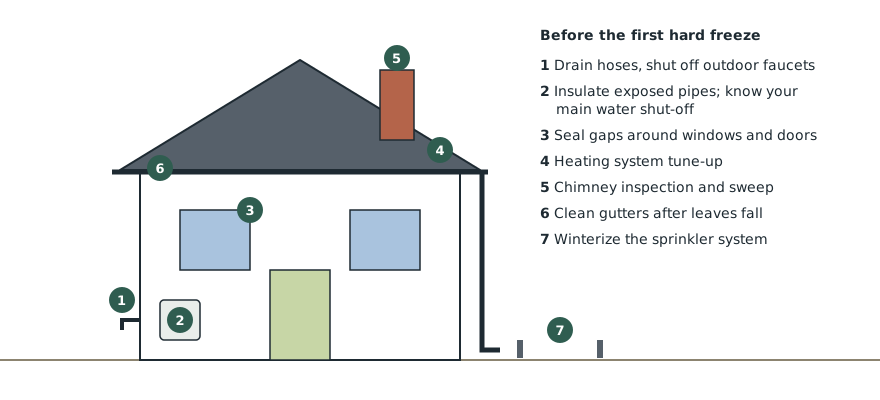
- Disconnect and drain garden hoses. Close the indoor valves that feed outdoor hose bibs, then open the bibs outside so they drain.
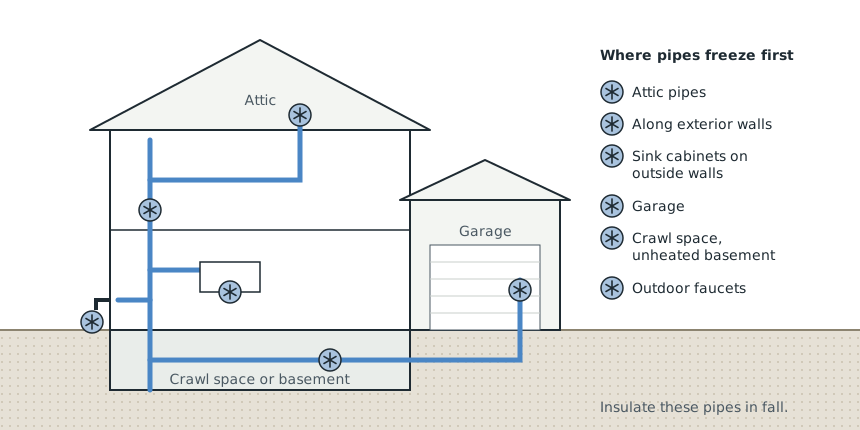
- Insulate exposed pipes. Fit foam sleeves on pipes in garages, crawl spaces, basements, attics and along exterior walls. The Red Cross also mentions heat tape or heat cable for pipes at higher risk.
- Find your main water shut-off valve. Make sure everyone in the house knows where it is and that it turns.
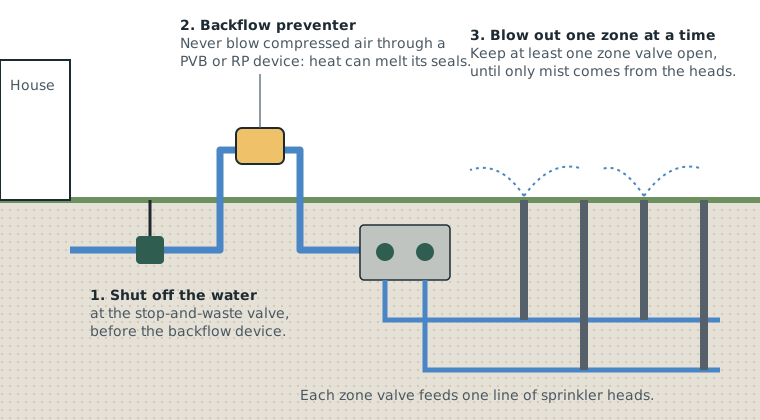
- Winterize the sprinkler system. Shut off its water and drain or blow out the lines before the first hard freeze. The sprinkler guide covers the details and safe air pressures.
- Check caulk around windows and door frames. Virginia Cooperative Extension says caulk is for fixed joints and openings up to a quarter inch wide.
- Check weatherstripping on doors and windows, the moving joints. Close a door or window on a dollar bill. If it slips out easily, Virginia Cooperative Extension says the weatherstripping needs repair.
- Seal other air leaks. The Department of Energy suggests caulking where plumbing, ducts or wiring pass through walls, floors and ceilings.
- Schedule a heating tune-up. ENERGY STAR recommends checking the heating system in the fall. A technician should check gas or oil connections, gas pressure, burner combustion and the heat exchanger.
- Check the furnace filter. ENERGY STAR suggests a monthly check.
- Have the chimney and any wood stove inspected. The U.S. Fire Administration says heating equipment and chimneys should be cleaned and inspected every year by a professional.
Finding drafts
On a windy day, the Department of Energy suggests carefully holding a lit incense stick near windows, doors, outlets, light fixtures and attic hatches. Keep it away from curtains, and watch where the smoke wavers: that's where air is leaking.
Virginia Cooperative Extension also describes a flashlight test for doors. One person shines a light around the edges from outside after dark. If a helper inside sees light, the door needs weatherstripping.
When you caulk, the extension guide recommends a clean, dry surface and one continuous bead with no stops and starts. Fill the gap completely.
Fire and carbon monoxide safety
Around chimneys, furnace flues and gas water heater vents, don't use regular caulk or foam. The Department of Energy says to use fire-resistant materials such as sheet metal, sheetrock and furnace cement caulk.
Keep anything that can burn at least 3 feet from fireplaces, wood stoves, radiators and space heaters, as both the U.S. Fire Administration and the Red Cross advise. Never heat your home with a cooking oven or stove.
Install carbon monoxide detectors and smoke alarms with battery backups, as the Red Cross recommends, and test them before the heating season; see smoke and CO alarm maintenance. Use generators, grills and camp stoves only outdoors and away from windows.
If you smell gas or a CO alarm sounds, leave the house first and call 911 or your gas company from outside.
What to leave to the pros
Leave gas connections, burners and heat exchangers to a licensed heating technician. The same goes for chimney flues, which a chimney professional should inspect.
Call a plumber for pipes that freeze every winter or need rerouting. Call an electrician for any work involving the electrical panel, and a roofer for repairs on a steep roof.
Go deeper
For more detail on keeping water lines safe, including how to thaw a frozen pipe, read how to prevent frozen pipes.
For booking your furnace or heat pump service, see the AC and furnace tune-up schedule.
Sources
- American Red Cross: Frozen pipes
- American Red Cross: Winter storm safety
- ENERGY STAR: Maintenance checklist
- U.S. Fire Administration: Heating fire safety
- U.S. Department of Energy: Energy Saver guide (2022)
- Virginia Cooperative Extension: What about caulking and weather-stripping?
- CPSC: Carbon Monoxide Information Center
- Mass.gov: What to do if you smell gas
Want every task on one schedule? Build your free maintenance calendar for your ZIP code and add it to your phone.