How to prevent frozen pipes, by climate
Prepare your pipes once a year, in the fall, before the first hard freeze. Then take a few extra steps each time a cold snap is in the forecast.
In cold northern climates that prep window comes early in the fall. In warm southern climates it comes later, and hard freezes are uncommon. Pipes there are often left unprotected, so a single cold night can still do damage. Check the table below for the month that fits your zone, or build a full schedule with the home maintenance calendar.
When to do it in your climate zone
| Climate zone | Like | Check pipe insulation in unheated areas | Disconnect hoses and protect outdoor faucets |
|---|---|---|---|
| Zone 1 (very hot) | Miami, Honolulu, Key West | Not usually needed | Not usually needed |
| Zone 2 (hot) | Houston, Phoenix, Orlando, Dallas | Not usually needed | November |
| Zone 3 (warm) | Atlanta, Nashville, Las Vegas, Los Angeles | October | October |
| Zone 4 (mixed) | Washington DC, New York City, St. Louis, Seattle | October | October |
| Zone 5 (cool) | Chicago, Denver, Boston, Salt Lake City | October | October |
| Zone 6 (cold) | Minneapolis, Fargo, Burlington (Vermont), Helena | September | September |
| Zone 7 (very cold) | Duluth, Caribou (Maine), Anchorage | September | September |
| Zone 8 (subarctic) | Fairbanks and interior Alaska | August | August |
Months are typical for each zone and match the free HouseByMonth calendar. Not sure of your zone? Find your climate zone. Weather varies year to year, so move a task earlier if a cold snap or heat wave arrives early.
Why frozen pipes are a problem
Water expands as it freezes. According to the American Red Cross, that expansion puts tremendous pressure on whatever holds the water, including metal and plastic pipes.
A split pipe often doesn't leak while it's frozen. The water comes out when the ice thaws, which can flood a wall, ceiling or basement before anyone notices.
Which pipes freeze first
Three groups of pipes are most at risk, according to the Red Cross:
- Pipes exposed to severe cold, such as outdoor hose bibs, swimming pool supply lines and sprinkler lines.
- Supply pipes in unheated interior spaces: basements, crawl spaces, attics, garages and kitchen cabinets.
- Pipes that run along exterior walls with little or no insulation.
Walk your house and note where these pipes are. Those spots get the most attention in the steps below.
Before cold weather: step by step
- Find your main water shut-off valve and make sure you can turn it. NC State Extension advises knowing where it is and how to use it before you need it.
- Remove, drain and store garden hoses. A hose left connected traps water in the faucet.
- Close the indoor valves that supply outdoor hose bibs. Then open the outside bibs so the water in them can drain.
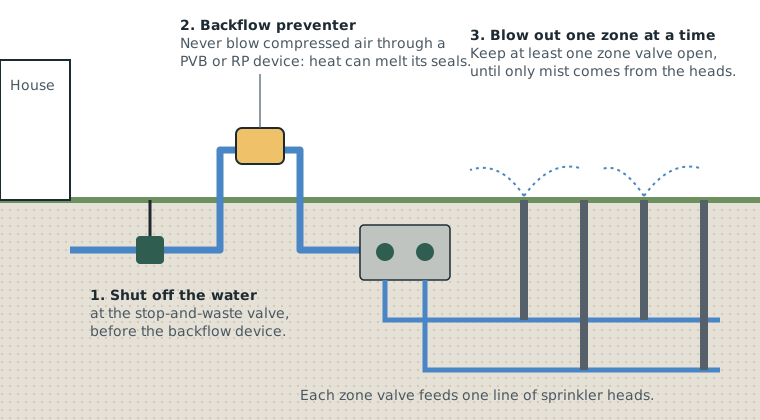
- Drain sprinkler and pool supply lines following the manufacturer's or installer's directions. See when to winterize sprinklers for details.
- Add insulation to attics, basements and crawl spaces. This helps keep the air around pipes above freezing.
- Fit foam pipe sleeves on exposed pipes in unheated areas and along exterior walls. Products like heat tape or heat cable are another option for pipes at high risk.
- If you use heat tape or heat cable, NC State Extension says to make sure it is UL approved and to follow the manufacturer's instructions.
For pipes that freeze repeatedly, the Red Cross suggests considering relocating them to a more protected spot. That is a job for a plumber.
During a cold snap
- Keep garage doors closed if water lines run through the garage.
- Open kitchen and bathroom cabinet doors so warmer room air reaches the plumbing. If cleaners are stored there, move them out of children's reach.
- When it's very cold, let cold water drip from faucets served by exposed pipes. Even a trickle of moving water helps prevent freezing.
- Keep the thermostat at the same temperature day and night instead of setting it back at night.
- If you travel, leave the heat on. The Red Cross and NC State Extension both say to set it no lower than 55°F.
Signs a pipe is already frozen
If you turn on a faucet and only a trickle comes out, suspect a frozen pipe. Frost on a visible pipe, or a faucet that suddenly stops working on a very cold morning, are other clues.
Check the other faucets in the house too, since pipes in similar spots may also be frozen.
How to thaw a frozen pipe
- Keep the faucet open. As the ice melts, water starts to flow, and running water helps melt the rest of the blockage.
- Find the frozen section. It is usually where the pipe is exposed or runs along an outside wall.
- Apply gentle heat. The Red Cross lists an electric heating pad wrapped around the pipe, a hair dryer, a portable space heater kept away from anything flammable, or towels soaked in hot water. Don't use any electrical device where water is dripping or pooling; use hot towels there instead.
- Work from the open faucet toward the frozen area, as NC State Extension recommends.
- Keep applying heat until full water pressure returns.
Never use a blowtorch, kerosene or propane heater, charcoal stove or any other open flame, as the Red Cross warns. They can start a fire, and fuel-burning heaters and charcoal stoves also give off carbon monoxide indoors.
If a pipe bursts
Shut off the water at the main valve right away. Stopping the flow limits the damage to your home.
If water is near outlets, appliances or the electrical panel, stay out of the wet area and don't touch them. Shut off power at the breaker only if you can reach it without standing in water; otherwise call your utility or an electrician.
Then call a plumber and contact your insurance agent, as NC State Extension advises.
When it's a job for a plumber
The Red Cross says to call a licensed plumber if you can't find the frozen area, can't reach it, or can't thaw the pipe. NC State Extension adds that thawing a pipe yourself can sometimes cause more damage.
Also call a plumber to reroute pipes that freeze every winter, or to install heat cable inside walls.
More cold-weather guides
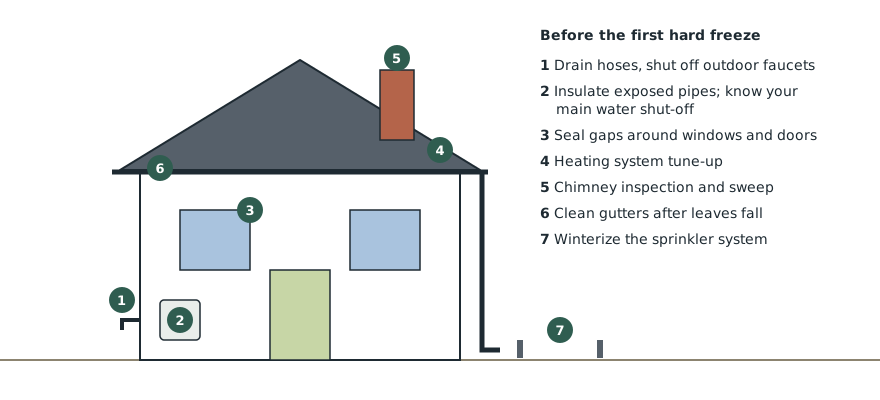
Pipe protection is one part of a bigger fall checklist. See how to winterize your house for the full list, including weatherstripping and a heating tune-up.
If you have an in-ground sprinkler system, its pipes and backflow device need their own shutdown. The sprinkler winterizing guide covers that step by step.
Sources
Want every task on one schedule? Build your free maintenance calendar for your ZIP code and add it to your phone.