When to schedule AC and furnace tune-ups
Schedule an AC tune-up once a year in spring and a heating tune-up once a year in fall. ENERGY STAR recommends checking the cooling system in spring and the heating system in fall, so each one is ready before you need it.
If you have a heat pump, it does both jobs. The Department of Energy recommends a professional service at least once a year, and the calendar shows both visits so you can pick the one that fits your climate best.
When to do it in your climate zone
| Climate zone | Like | Schedule an AC tune-up | Schedule a heating tune-up |
|---|---|---|---|
| Zone 1 (very hot) | Miami, Honolulu, Key West | March | Not usually needed |
| Zone 2 (hot) | Houston, Phoenix, Orlando, Dallas | March | November |
| Zone 3 (warm) | Atlanta, Nashville, Las Vegas, Los Angeles | April | October |
| Zone 4 (mixed) | Washington DC, New York City, St. Louis, Seattle | April | October |
| Zone 5 (cool) | Chicago, Denver, Boston, Salt Lake City | May | September |
| Zone 6 (cold) | Minneapolis, Fargo, Burlington (Vermont), Helena | May | September |
| Zone 7 (very cold) | Duluth, Caribou (Maine), Anchorage | June | August |
| Zone 8 (subarctic) | Fairbanks and interior Alaska | Not usually needed | August |
Months are typical for each zone and match the free HouseByMonth calendar. Not sure of your zone? Find your climate zone. Weather varies year to year, so move a task earlier if a cold snap or heat wave arrives early.
Why a yearly tune-up matters
A tune-up catches small problems before they turn into a breakdown on the hottest or coldest day of the year. It also keeps the system running efficiently, because dirty coils and loose parts make it work harder.
For fuel-burning heat, the visit is also a safety check. The CPSC recommends a yearly professional inspection of all fuel-burning heating systems, including furnaces, boilers, fireplaces, wood stoves, water heaters, chimneys, flues and vents. The U.S. Fire Administration also advises having heating equipment cleaned and inspected each year by a professional.
Timing in hot, mixed and cold zones
The calendar places each tune-up about a month before that season starts in your zone. Booking ahead of the rush also makes it easier to get an appointment.
In the very hot zone, the calendar has no heating season, so the AC visit is the one that matters. In the subarctic zone, it has no cooling season, so the heating visit is the priority.
Mixed and cool zones usually need both visits, spaced about half a year apart. See the table above for your exact months, or build a full plan with the home maintenance calendar.
What an AC tune-up should include
ENERGY STAR and the Department of Energy list these items for the cooling visit:
- Clean the indoor (evaporator) and outdoor (condenser) coils.
- Check the refrigerant charge and test for leaks.
- Check and clear the condensate drain, so it doesn't overflow and damage walls or floors.
- Clean and adjust blower parts and measure airflow.
- Tighten electrical connections and measure voltage and current on motors.
- Lubricate moving parts and check belts.
- Check that the thermostat and controls start, run and shut off the system correctly.
What a heating tune-up should include
For furnaces and boilers, ENERGY STAR adds these checks:
- Inspect gas or oil connections and gas pressure.
- Check burner combustion.
- Inspect the heat exchanger.
- Check the same electrical, control and thermostat items as the AC visit.
A cracked heat exchanger or a blocked vent can let carbon monoxide into the house. That's why the CPSC treats the yearly inspection as a carbon monoxide safety step, not only an efficiency one.
What you can do between visits
You don't need tools for most of the homeowner side of this job:
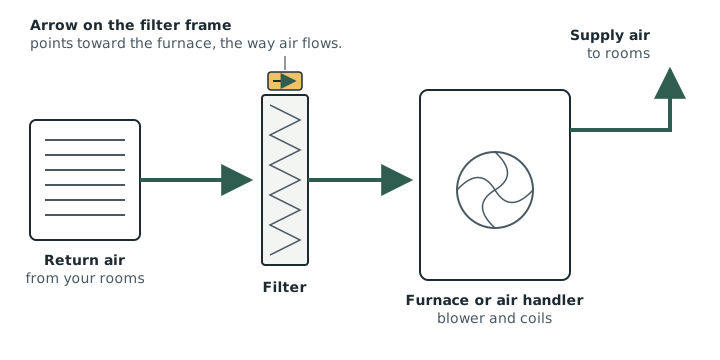
- Check the air filter monthly and replace it when it's dirty. See how often to change your HVAC filter.
- Keep the outdoor unit clear. The Department of Energy suggests trimming plants back at least 2 feet around the condenser.
- With power to the unit off, clear leaves, grass clippings and other debris from around the outdoor unit.
- Keep anything that can burn at least 3 feet from heat sources, as the U.S. Fire Administration advises.
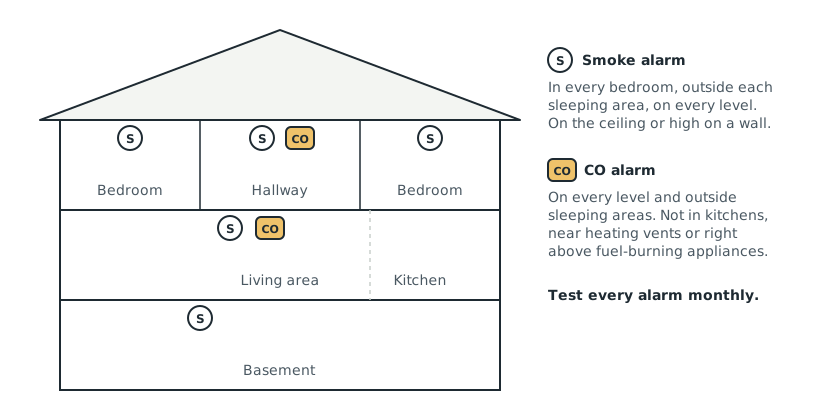
- Test your carbon monoxide alarms monthly. The CPSC recommends alarms on each level of the home and outside sleeping areas.
Problems that call for a visit now
Book service right away for any of these:
- The AC runs but doesn't cool the house to a comfortable level.
- Water pooling near the indoor unit or a stuck condensate drain.
- New grinding, banging or squealing noises.
- Ice on the refrigerant lines or indoor coil.
- A furnace that cycles on and off often or won't light.
- A carbon monoxide alarm sounding.
If a CO alarm sounds or you suspect carbon monoxide poisoning, the CPSC advises getting outside to fresh air immediately, then calling 911.
Staying safe around the equipment
Turn off power at the outdoor unit's disconnect or the breaker before clearing debris around it. Leave refrigerant, gas lines, burners and electrical panels to a licensed technician.
If you smell gas, don't switch lights or appliances on or off, and don't try to shut off the gas. Leave the house right away and call 911 or your gas company from outside.
Why this is a technician's job
The tune-up itself is a job for a licensed HVAC technician. Refrigerant work, gas connections and combustion checks need training and equipment most homeowners don't have.
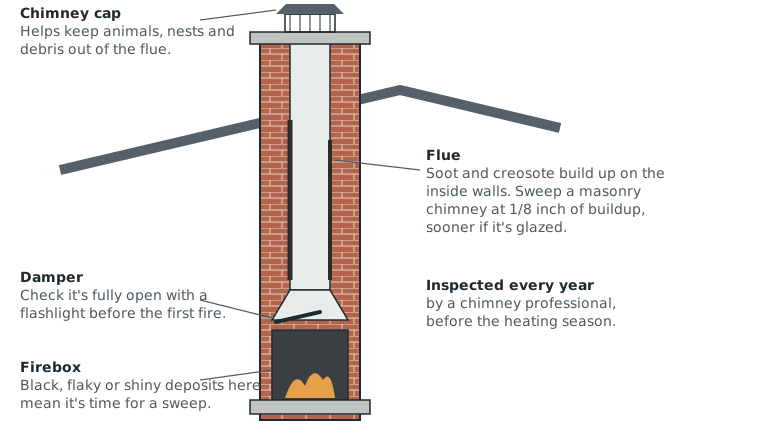
If you heat with a wood stove or fireplace, its chimney needs its own yearly inspection. See when to clean your chimney.
Pair it with
The fall heating tune-up fits into a bigger cold-weather checklist in colder zones. Pair it with the steps in how to winterize your house.
Sources
- ENERGY STAR: Maintenance checklist
- U.S. Department of Energy: Maintaining your air conditioner
- U.S. Department of Energy: Operating and maintaining your heat pump
- CPSC: Carbon monoxide and home heating equipment
- CPSC: Stay safe while staying warm this winter (2024)
- U.S. Fire Administration: Heating fire safety
- CPSC: Carbon Monoxide Information Center
- Mass.gov: What to do if you smell gas
Want every task on one schedule? Build your free maintenance calendar for your ZIP code and add it to your phone.