How to test and maintain smoke and carbon monoxide alarms
Test every smoke and carbon monoxide (CO) alarm in your home once a month. Replace the batteries at least once a year, unless the alarm has a sealed 10-year battery, and replace each smoke alarm 10 years from its manufacture date.
That schedule comes from the U.S. Fire Administration (USFA) and the U.S. Consumer Product Safety Commission (CPSC), which both recommend monthly tests and yearly battery changes.
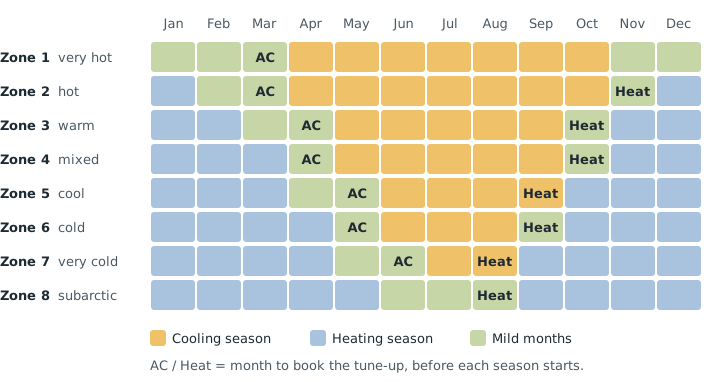
When to do it in your climate zone
| Climate zone | Like | Test smoke and CO alarms | Replace smoke alarm batteries |
|---|---|---|---|
| Zone 1 (very hot) | Miami, Honolulu, Key West | Every month | November |
| Zone 2 (hot) | Houston, Phoenix, Orlando, Dallas | Every month | November |
| Zone 3 (warm) | Atlanta, Nashville, Las Vegas, Los Angeles | Every month | November |
| Zone 4 (mixed) | Washington DC, New York City, St. Louis, Seattle | Every month | November |
| Zone 5 (cool) | Chicago, Denver, Boston, Salt Lake City | Every month | November |
| Zone 6 (cold) | Minneapolis, Fargo, Burlington (Vermont), Helena | Every month | November |
| Zone 7 (very cold) | Duluth, Caribou (Maine), Anchorage | Every month | November |
| Zone 8 (subarctic) | Fairbanks and interior Alaska | Every month | November |
Months are typical for each zone and match the free HouseByMonth calendar. Not sure of your zone? Find your climate zone. Weather varies year to year, so move a task earlier if a cold snap or heat wave arrives early.
Same schedule everywhere, with one exception
Alarm maintenance does not depend on climate, so the schedule is the same in every zone. The monthly test happens all year, and the yearly battery change falls in November, when the clocks change.
Climate still matters in one way. In colder zones, furnaces, boilers, fireplaces and space heaters run for more of the year, and those are common sources of CO. Make sure your CO alarms work before the heating season starts. The home maintenance calendar adds both reminders to your schedule.
What a working alarm protects against
A smoke alarm with a dead battery or a fault gives no warning in a fire. CO is a colorless, odorless gas, which is why the USFA calls it the "invisible killer." Without a working alarm, you have no reliable way to know it is there.
Breathing CO at high levels can be fatal. The CPSC's Carbon Monoxide Information Center lists the symptoms of CO poisoning as headache, dizziness, weakness, nausea, vomiting, sleepiness and confusion.
Where your alarms should be
Before you test, make sure you have enough alarms in the right places. The USFA and CPSC recommend:
- Smoke alarms inside each bedroom, outside each sleeping area and on every level of the home.
- Smoke alarms on the ceiling or high on the wall.
- CO alarms on every level of the home and outside sleeping areas.
- Interconnected smoke alarms, so when one sounds, they all sound.
The CPSC says not to put CO alarms in attics or basements unless they include a sleeping area. Avoid spots near heating vents, in kitchens, directly above fuel-burning appliances, or where furniture or curtains can cover the alarm.
When an alarm can't wait for the monthly test
Deal with an alarm right away if:
- The alarm chirps on its own. Check the manual: a chirp often means a low battery or that the alarm has reached the end of its life.
- The alarm does not sound when you press the test button.
- The date on the back shows the smoke alarm is 10 or more years old.
- An alarm was painted over, covered or damaged.
- An alarm sounds every time you cook. Never remove the battery. The USFA suggests opening a window or door and pressing the hush button, or moving the alarm several feet away from the kitchen.
How to test and maintain your alarms, step by step
The monthly test takes about 10 minutes for a typical home. The yearly battery change takes a bit longer.
- Tell everyone in the house you are testing, since the alarms are loud.
- Press and hold the test button on each smoke alarm until it sounds.
- Do the same on each CO alarm. Follow the manufacturer's instructions for that model.
- If you have interconnected alarms, check that the others sound too.
- Replace the battery in any alarm that does not sound, then test again.
- Replace any alarm that still fails after a new battery.
- Once a year, replace the batteries in every alarm, including backup batteries in hardwired alarms. Skip sealed 10-year models.
- Check the manufacture date on the back of each smoke alarm. Replace it if it is 10 years old.
- For CO alarms, check the replacement age in the product literature. The CPSC says each alarm has one set by its manufacturer.
The test button checks that the alarm's circuitry works, not the accuracy of the sensor, according to the CPSC. That is another reason to replace alarms on schedule rather than keep them until they fail.
If the CO alarm sounds
Never ignore a CO alarm. Move outside to fresh air right away and call 911 or the fire department.
Count everyone to make sure all people are out. Do not go back inside until emergency responders say it is safe. That is the CPSC's sequence.
Reaching ceiling and hardwired alarms
Use a sturdy step stool or ladder to reach ceiling alarms, and have someone hold it. Do not stand on chairs or the top step.
For hardwired alarms, follow the manufacturer's instructions for changing the backup battery. If you need to disconnect or replace a hardwired alarm, turn off the circuit at the breaker first. If you are not comfortable with that, hire an electrician.
People who are deaf or hard of hearing can use alarms made for them. The USFA notes these may have strobe lights that flash or devices that vibrate.
Jobs for an electrician or technician
Call an electrician to add or replace hardwired or interconnected alarms. If a CO alarm sounds again within 24 hours, repeat the steps above, then have a qualified appliance technician check all fuel-burning equipment, as the CPSC advises.
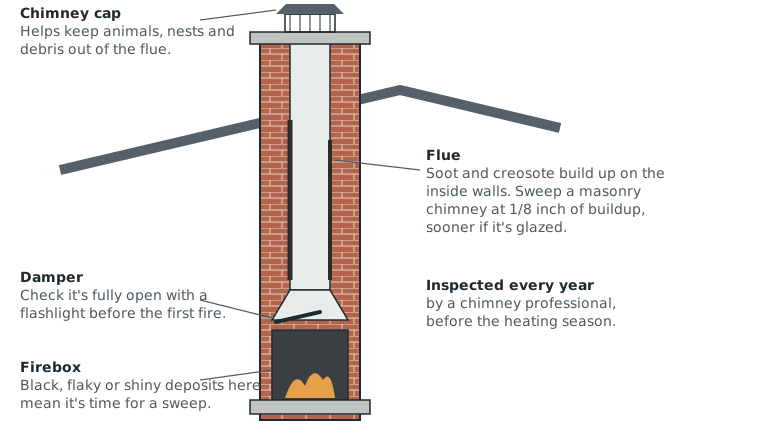
The CPSC also recommends a professional inspection of your heating system every year, including chimneys and flues. See when to clean your chimney.
See also
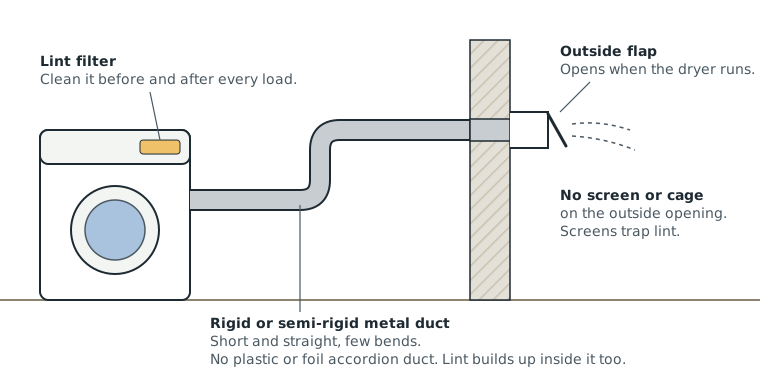
The USFA's carbon monoxide advice includes keeping dryer, furnace and fireplace vents clear. For the dryer, follow the dryer vent cleaning guide.
Sources
- U.S. Fire Administration: Smoke alarms
- U.S. Fire Administration: Test carbon monoxide alarms at least once a month
- U.S. Fire Administration: Carbon monoxide poisoning prevention
- U.S. Consumer Product Safety Commission: Carbon Monoxide Information Center
- U.S. Consumer Product Safety Commission: CO alarms
- U.S. Consumer Product Safety Commission: Carbon monoxide questions and answers
- U.S. Consumer Product Safety Commission: Replace batteries in smoke and CO alarms (2023)
Want every task on one schedule? Build your free maintenance calendar for your ZIP code and add it to your phone.